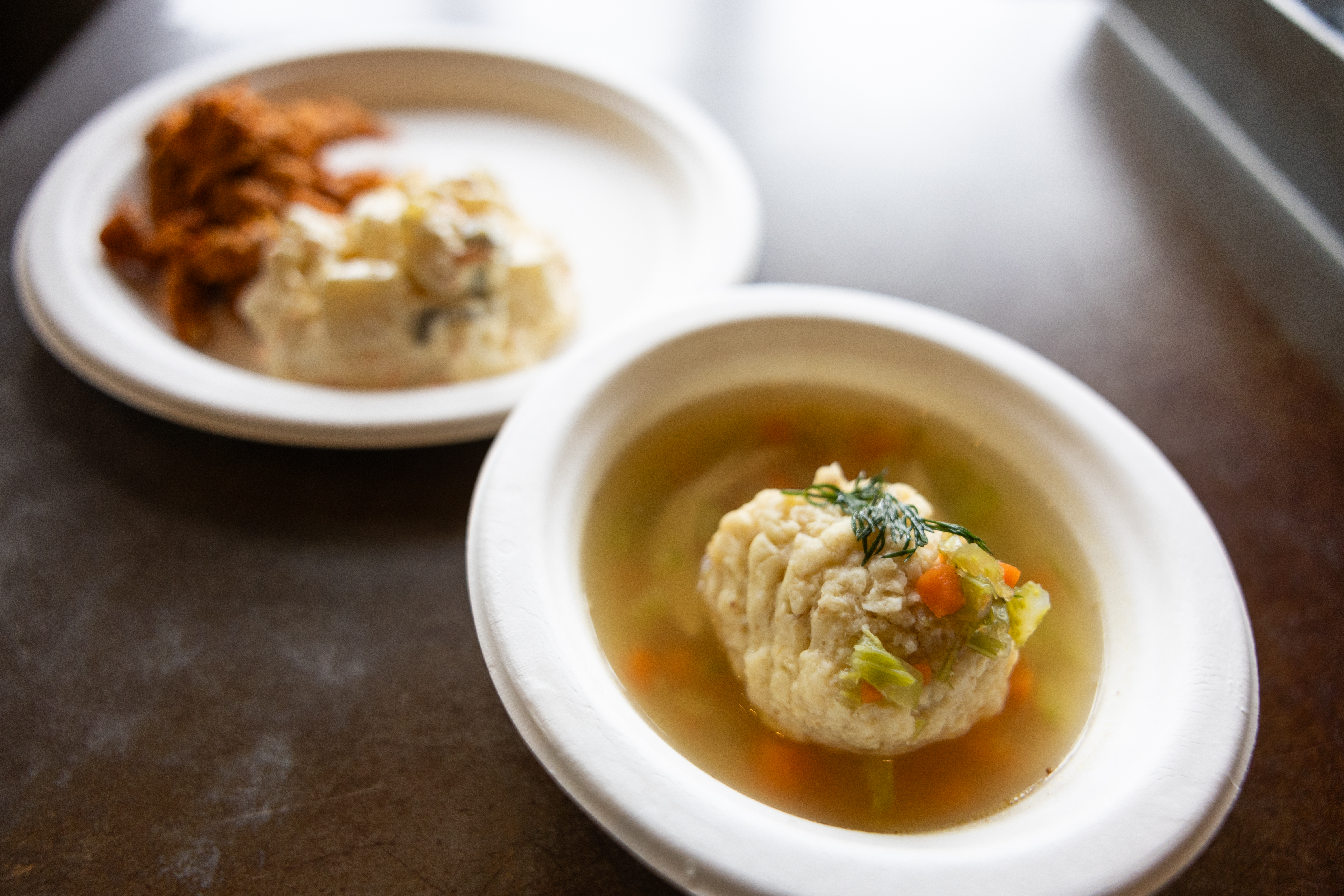
For many people, food is more than nourishment, it tells a story of faith, resilience and belonging. Meals bring communities together in moments of reflection and in times of celebration.
As the sun sets during Ramadan, students across campus prepare to break their fast with Iftar, the evening meal that follows a full day without food or drink. For students observing Passover, the focus shifts to meals prepared without chametz, substituting leavened grains (wheat, barely, oats, rye and spelt) for matzo and kosher-for-Passover ingredients according to Jewish tradition.
Behind each of these observances stands months of planning, coordination and care from the MSU Culinary Services (CS) team, a symbol of commitment to inclusive, authentic dining.
“MSU is a very large campus,” says Senior Executive Chef for Residential Dining Bryan Latz. “We try to provide something for everyone and meet them where they’re at. Whether it’s religious needs, dietary needs or simply offering freedom of choice. We want students to have healthy, nutritious options that feel familiar and respectful.”
Behind The Scenes
Preparation for Ramadan begins at least six weeks before the observance. Senior executive chefs work closely with neighborhood executive chefs, retail chefs and operational managers to build menus across all dining locations. They finalize menus at least six weeks before Ramadan begins and submit projections to food stores to secure inventory. The plan requires certified halal proteins from approved vendors. Each shipment includes documentation verifying halal certification to maintain compliance and supply chain integrity.
“It’s a very tight collaboration,” Chef Bryan says. “Procurement works directly with vendors to verify certifications. Every halal shipment comes with documentation. Vendors know what we need and we’ve built strong partnerships over time."
The process is highly coordinated. Standard operating procedures are developed and shared across units. Retail and residential teams work together to make sure there are no gaps in coverage. Recipes are researched, tested and adjusted for authenticity and balance.
“If we’re putting on a cultural dish, the first thing we’re doing is research,” says Chef Bryan. “We want to become knowledgeable about it, source ingredients locally when possible, test the recipe and make sure it reflects the flavors students expect.”
With the support of Kelsey Patterson, registered dietitian for CS and adjunct instructor in the Department of Food Science and Human Nutrition, the CS department ensures meals are nutritionally balanced and inclusive.
“My role is to make sure students with dietary restrictions have options and that menus are balanced and supportive,” says Patterson. “We’re sourcing ingredients, supporting staff and providing training so that what we’re offering truly meets students’ needs.”
From Sunrise to Sunset
Ramadan, observed this year from the evening of Feb. 17 through March 18, involves daily fasting from sunrise to sunset, beginning with Suhoor, a pre-dawn meal and breaking fast at Iftar in the evening. To accommodate these needs, CS ensures halal protein options are available every night in each residential neighborhood dining hall along with vegan options.
Menus feature globally inspired dishes such as halal beek kofta, saffron chicken, lamb korma, butter chicken and tandoori specialties. Retail locations expand their offerings to include halal-certified grab-and-go items, which are commonly used to break a fast, such as dates, mango juice, canned tuna, dried fruits and microwaveable meals.
In many locations, students observing Ramadan can request their meals to-go, a flexibility not typically offered in all-you-care-to-eat settings.
“Guests just need to alert the station that they’re observing Ramadan and would like the food to go,” Latz said. “We’ll package it so they can take it with them.”
Special Eid al-Fitr celebrations at Brody Square, The Gallery at Snyder/Phillips, South Pointe at Case and The Edge at Akers mark the conclusion of Ramadan. Culinary teams collaborate with procurement and outside vendors to source traditional desserts, ensuring authenticity and cultural significance.
Practicing Passover
Passover is an eight-day observance which prohibits chametz, leavened grains such as wheat, barley, oats, rye and spelt, requiring certified-kosher for Passover foods. While MSU does not have a certified-kosher kitchen on campus, CS partners with Woody’s Oasis in East Lansing, where meals are prepared in a certified kosher facility under Kosher Michigan supervision.
Kosher meal service is available at Brody Square and The Gallery at Snyder/Phillips Sunday through Thursday during fall and spring semesters. During Passover, students can access kosher-for-Passover items, including canned tuna, hard-cooked eggs, matzo crackers and packaged sliced meats. Single-service disposable dinnerware is available upon request to maintain kosher standards.
MSU’s kosher meal program was developed in partnership with Rabbi Jason Miller of Kosher Michigan, Cindy Haughey of the MSU Hillel Jewish Student Center and Woody’s Oasis leadership. Community collaboration is the heart of making inclusive dining possible at MSU.
Listening, Learning and Improving
Student voices are central to the process. CS works closely with the Muslim Student Association, religious studies faculty and other registered student organizations to gather feedback.
Training is another critical and often unseen component. Staff participate in halal food handling training and online education modules to ensure cultural and religious sensitivity. Marketing teams promote options through social media, the Eat at State website and campus outreach efforts so students know what is available before observances begin.
“As a chef, I love learning new cuisines and cultures,” says Chef Bryan. “But more importantly, we’re here to take care of our students. We wouldn’t have jobs without them. Knowing you’re making a difference on this scale is special.”
A recent student survey results show 95% satisfaction related to meeting dietary and religious needs, an increase since 2023.
As MSU continues to grow as a global campus community, inclusive dining remains an evolving priority. With strong partnerships, open communication and a willingness to adapt. CS is ensuring when students gather to observe meaningful traditions they can do so feeling supported and at home.
Learn more at eatatstate.msu.edu/eat-at-state-events.
Author: Olivia Williams