Fresh salad greens at Brody Square. Savory breakfast sausage at Case Hall. A dollop of honey stirred into a cup of tea at Akers. These may seem like everyday dining hall staples, but dig a little deeper, and they tell a larger story of connection.
Many of the ingredients found in dining halls across campus may have been grown or raised at Michigan State University. Through partnerships with MSU’s agricultural programs, Culinary Services brings university-grown vegetables, beef, pork and honey to campus dining. These items help connect students with the people who produce their food while supporting MSU’s teaching and research initiatives.
Campus Connection on the Menu
Culinary Services began purchasing MSU beef in 2012, pork in 2015 and honey in 2023, according to Stacey Dawson, associate director of support services for Culinary Services.
During the 2025–26 academic year, Culinary Services purchased 18,211 pounds of MSU beef, 3,345 pounds of MSU pork and 11,286 pounds of MSU honey. It also purchased an additional 2,832 pounds of ground chorizo made from MSU pork and processed by the MSU Meat Lab, says Dawson.
Bryan Latz, associate director of residential dining, says many cuts of MSU beef and pork are served at South Pointe at Case Hall. MSU pork also goes into breakfast sausages produced at the MSU Meat Lab, while cuts such as strip loin, ribeye and beef tenderloin are featured at the annual student appreciation dinner in December.
MSU honey is offered at dining hall beverage stations and used in recipes when supplies are available. After the university’s supply runs out, Culinary Services switches to honey from other suppliers.
The purchases serve a purpose beyond the menu. Latz says buying products from MSU’s agricultural programs provides revenue that supports their academic work.
“They are research first, and by purchasing and utilizing the end product we support the academic mission.”
Grown by Students and Served to Students
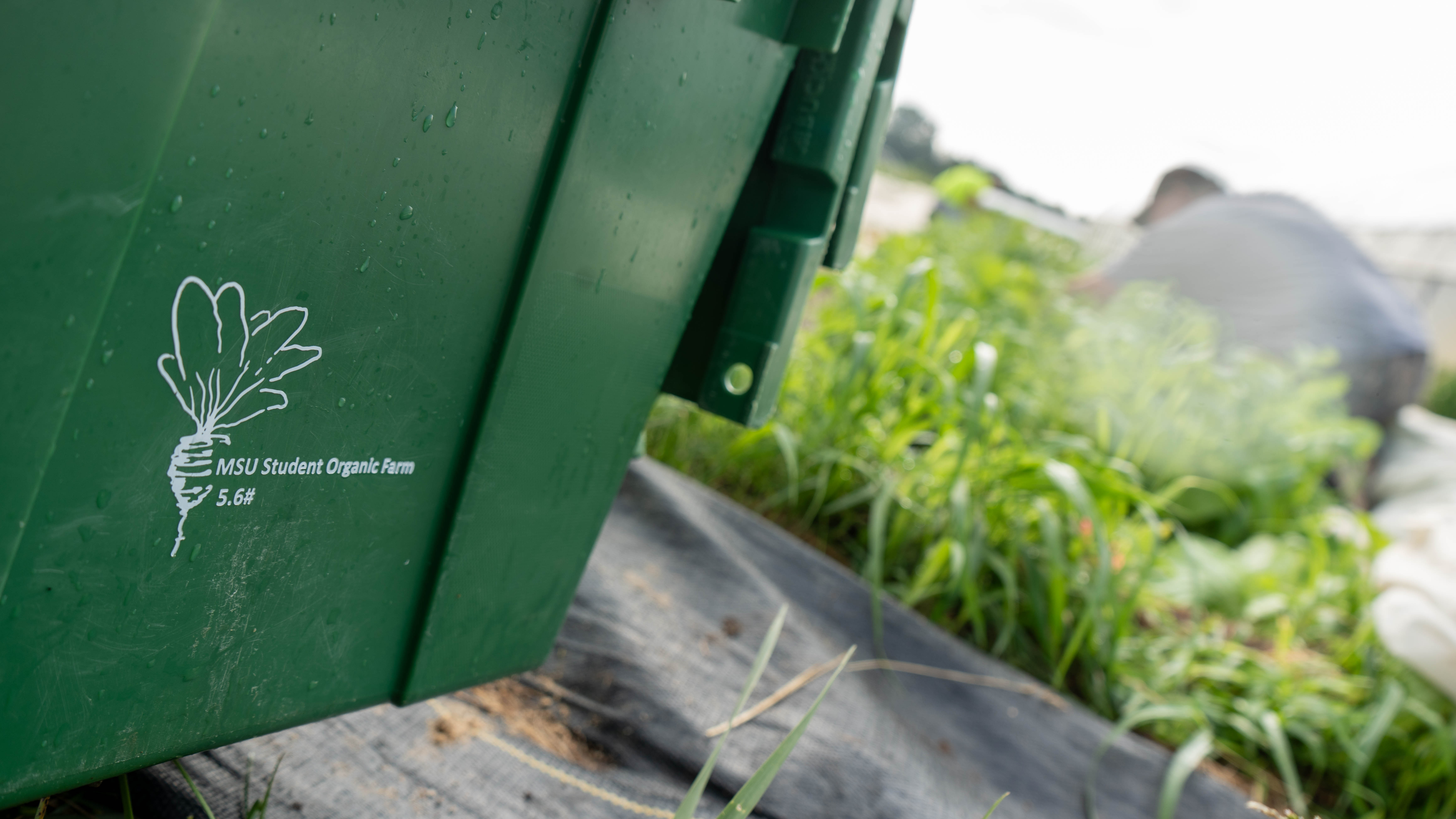
At the MSU Student Organic Farm, paid student employees and volunteers do most of the work involved in growing and harvesting vegetables for campus dining.
Students employed at the farm work full time during the summer and part time around their classes during the school year. Individuals, classes and registered student organizations can also volunteer.
The farm supplies a variety of seasonal vegetables, including lettuce, arugula, kale, tomatoes, peppers and onions. Salad greens are its most frequently purchased product, partly because the farm can offer them almost year-round, says Darby Anderson, Student Organic Farm manager.
In 2025, MSU chefs purchased, prepared and served just over 8,000 pounds of the farm’s produce. As of early October 2026, purchases had reached 7,676 pounds, with two of the farm’s largest sales months still ahead, Anderson says.
“Knowing that the food on their plate was grown or raised at MSU can help students feel more connected to the university and to the people, land and work that makes that food possible.”
The Place for Seasonal Food
At Brody Square, a dedicated farm salad bar gives students a place to find campus-grown produce. Opened in fall 2024 by Chef Ben Segueda and his team, the salad bar features ingredients from the Student Organic Farm, and Bailey Greenhouse and Urban Farm, along with MSU honey and specially sourced toppings and dressings.
The selection changes with the growing season. Anderson says this helps students learn about when vegetables are available during the seasons and what it takes to grow them.
“There are no tomatoes at the salad bar in January!” Anderson says.
The farm’s size and seasonal production mean it cannot meet all of campus dining’s produce needs. Instead, chefs and farm staff work together to plan crops and menus that make use of what is available.
Anderson says possible opportunities include offering farm produce at the 1855 Market salad bar or through another campus farm stand during the semester. Those possibilities would give students more ways to access the produce, while keeping the farm’s focus on experiential learning.
For Anderson, the connection between the farm and the dining halls is a chance to encourage students to think more about their meals.
“I hope it encourages students to be more curious about their food, where it comes from, how it is produced and the impact their food choices can have on their community and environment.”
Students interested in learning more about the Student Organic Farm or getting involved can visit organicfarm.msu.edu.
Author: Charlotte Riddiford